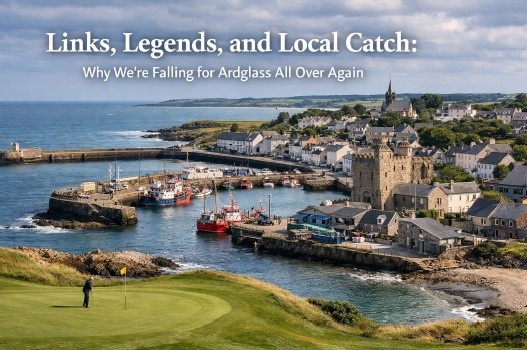
There are places in County Down that whisper their charm quietly, and then there's Ardglass – a harbour village that doesn't just whisper, it sings. With the Irish Sea on one side and rolling fairways on the other, this coastal gem has been hiding in plain sight for far too long. As Downpatrick estate agents who've spent decades watching trends come and go, we're noticing something interesting: people are rediscovering what makes Ardglass special.
Not the sanitised, Instagram-filtered version of coastal living either. We're talking about the real deal – where fishing boats still unload their catch at dawn, medieval castles stand guard over the harbour, and golfers chase their balls across links that would make St Andrews jealous.
The Links: Where Golf Meets the Irish Sea
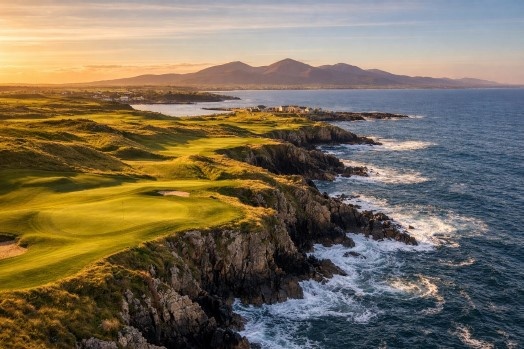
Let's start with the obvious elephant in the room – or rather, the golf course perched spectacularly on the cliff edge. Ardglass Golf Club isn't just any golf course. It's an 18-hole championship links that's been testing golfers since 1896, making it one of the oldest clubs in Ireland.
What sets it apart? Try these for starters:
• Dramatic coastal positioning – Every hole offers views across the Irish Sea, with the Mourne Mountains providing a backdrop that's almost unfairly beautiful
• True links terrain – This isn't a manicured parkland pretending to be links; it's the real thing, with natural undulations, sea breezes, and that distinctive firm turf
• The clubhouse setting – Housed in Ardglass Castle, a 14th-century fortification once owned by the Earls of Kildare. You're literally teeing off from history
• Accessibility without pretension – Despite its championship credentials, the club maintains a welcoming atmosphere that's more about the love of the game than elite memberships
The course has hosted numerous prestigious tournaments, yet it's never lost that village club feel. You might find yourself sharing the 19th hole with a local farmer who's been playing there for forty years, swapping stories about the tricky seventh hole that's claimed more balls than anyone cares to admit
.
For those considering coastal living in Co Down, having a world-class golf course on your doorstep isn't just about the sport – it's about the lifestyle, the community, and yes, those sunset rounds when the light turns golden over the water.
The Legends: Medieval Towers and Maritime Tales
History isn't something you read about in Ardglass – it's something you walk past on your way to the shop. The village holds a distinction that surprises most people: it contains more medieval tower houses than any other town in Ireland. Four, to be exact. That's not a typo.
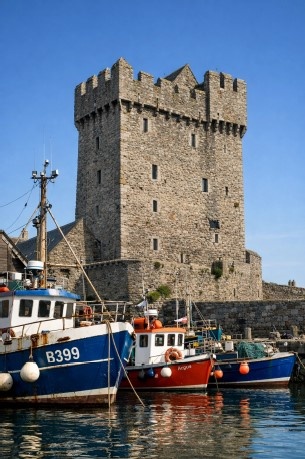
Jordan's Castle dominates the harbour view, a perfectly preserved four-storey tower house from the 15th century. It's not a ruin propped up for tourists – it's a substantial structure that speaks to Ardglass's strategic importance in medieval Ulster. When you consider that this was once Ulster's busiest port in the 15th century, those stone towers start making sense. This wasn't a sleepy fishing village; it was a thriving Anglo-Norman stronghold where trade, politics, and maritime power converged.
The other castles dot the landscape like exclamation marks:
• Ardglass Castle (now the golf clubhouse we mentioned)
• Cowd Castle and Margaret's Castle – remnants of a time when Ardglass was fortified against both sea raiders and rival lords
Walking through the village, you're essentially touring an outdoor museum, except people actually live here. Children play football near medieval walls. The local café operates from a building that's seen five centuries of commerce. It's this seamless blending of past and present that gives Ardglass its unique character.
The harbour itself tells stories too – of Norman knights, merchant ships laden with wool and wine, fishing fleets that braved the Irish Sea for generations. Over two thousand years of maritime heritage isn't just a tourism tagline; it's woven into the very fabric of daily life here.
The Local Catch: A Working Harbour with Real Character
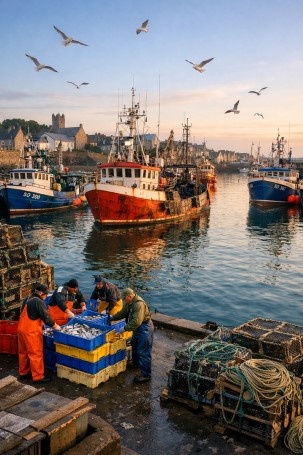
Here's where Ardglass really sets itself apart from the polished marina developments springing up along coastlines everywhere. This is a working fishing harbour – one of only three major fishing ports in Northern Ireland. Thirty fishing vessels call Ardglass home, and they're not museum pieces or
photo opportunities. They're out there, day and night, bringing in the catch that makes this village economically vibrant and culturally authentic.
The harbour is fully accessible at all tide levels, which is why it's remained commercially viable while other ports have faded. Multiple fish processing factories line the waterfront, meaning the economic benefit stays local. When you buy fish in Ardglass, there's a genuine chance it was swimming off the coast that very morning.
Ardglass herring has achieved almost legendary status – world-famous among those who know their seafood. But it's not just about the herring:
• Fresh langoustines that rival anything you'd find in fancy city restaurants
• Locally caught crab and lobster available from boats tied up at the quay
• Seasonal varieties depending on what the Irish Sea is offering up
• Fish and chip shops that source locally (because why wouldn't you?)
There's something grounding about living in a place where the economy isn't entirely dependent on tourism or commuters. Ardglass works for its living, and that gives the community a resilience and authenticity you don't find everywhere.
The sight of fishing boats heading out at dusk, their lights twinkling against the darkening sea, or returning at dawn with gulls wheeling overhead – these aren't staged experiences for visitors. They're Tuesday. They're Thursday. They're every day.
The Village Feel: Small Enough to Matter
In an era when many coastal spots have become either retirement villages or holiday home ghosr towns, Ardglass maintains a genuine community. The population is modest, but that's part of the appeal – small enough that you'll recognise faces at the local shops, large enough to support proper
amenities.
The village offers:
• Local primary school maintaining village traditions
• Community events that bring generations together
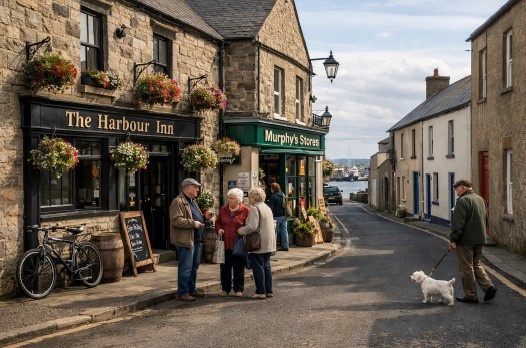
• Traditional pubs where conversation is still the main entertainment
• Local shops that know your name (and possibly your grandmother's name)
There's a particular quality to villages that are still economically active. Unlike purely residential developments, Ardglass has people of all ages, from fishing families whose roots go back centuries to newcomers drawn by the coastal living lifestyle Co Down offers at its best.
The commute to Downpatrick is straightforward, making it viable for those who work in town but crave that harbour view when they get home. Belfast is within reach for those who need city access but want to leave it behind at the end of the day.
Why Ardglass, Why Now?
As estate agents who've been serving County Down for generations, we watch how areas evolve. Ardglass is having a moment – not the flash-in-the-pan kind fuelled by Instagram posts, but a genuine reappraisal of what makes a place worth calling home.
Ardglass delivers all three, wrapped in medieval history, maintained by a working harbour, and crowned with one of Ireland's finest golf courses. The coastal scenery is spectacular without being twee. The village has character without being self-conscious about it.
Whether you're drawn by the golf, fascinated by the history, seduced by the seafood, or simply craving sea air and genuine community, Ardglass makes a compelling case for itself. It's not trying to be Portofino or the Cotswolds. It's proudly, authentically, uncompromisingly itself.
And honestly? In a world of increasingly homogenised places, that's refreshing.
Peter Fitzpatrick and Sons have been helping people find their perfect home in County Down for generations. If you're curious about coastal living in Co Down and what opportunities might be emerging in areas like Ardglass, get in touch with our team. We're always happy to chat about what makes these harbour villages so special – no pressure, just local knowledge and genuine enthusiasm for the places we serve.